
D[Nowhere]J·South Africa→Johannesburg
DJ & producer, co-founder of UMGQIBELO and Gqom Mixtapes
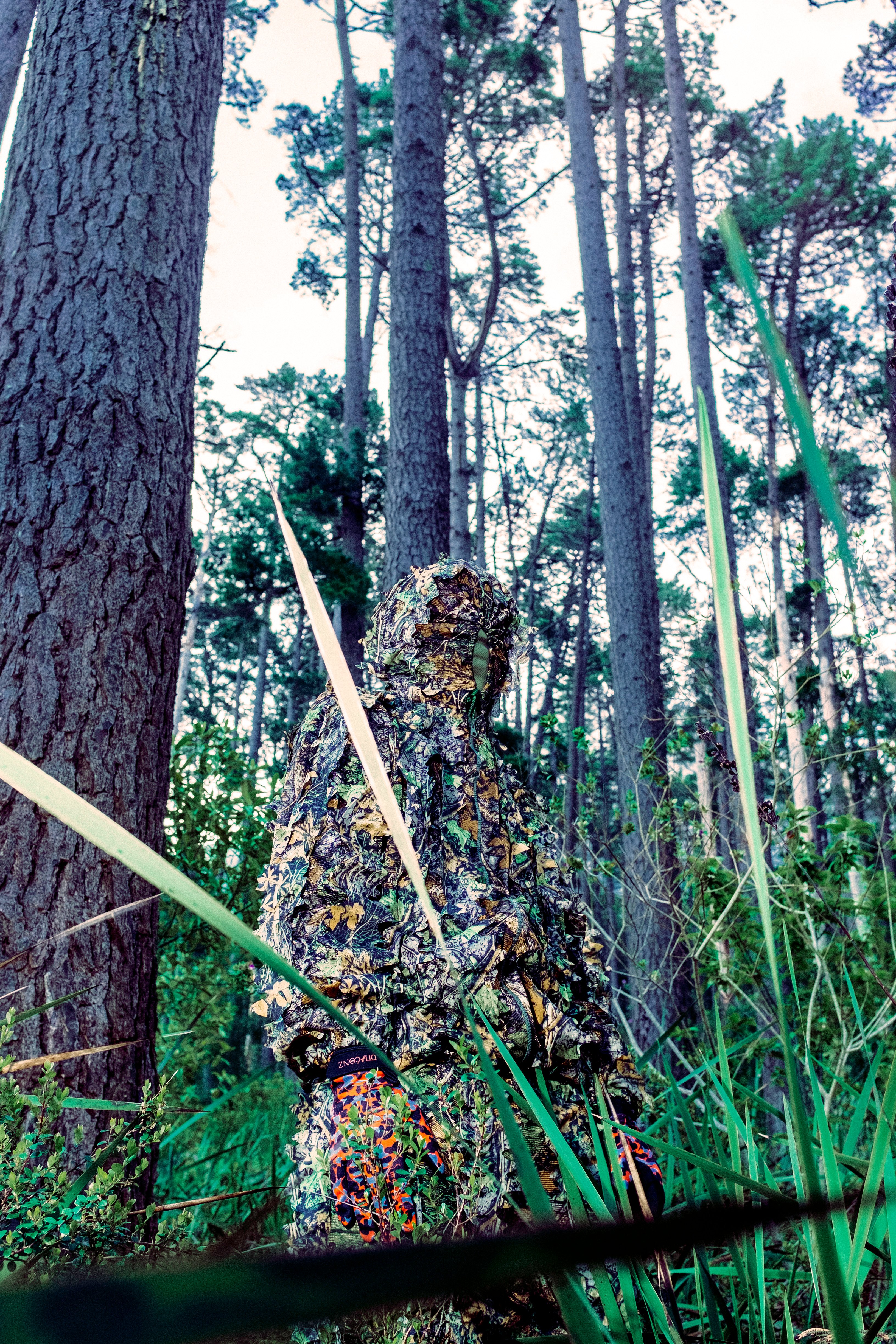

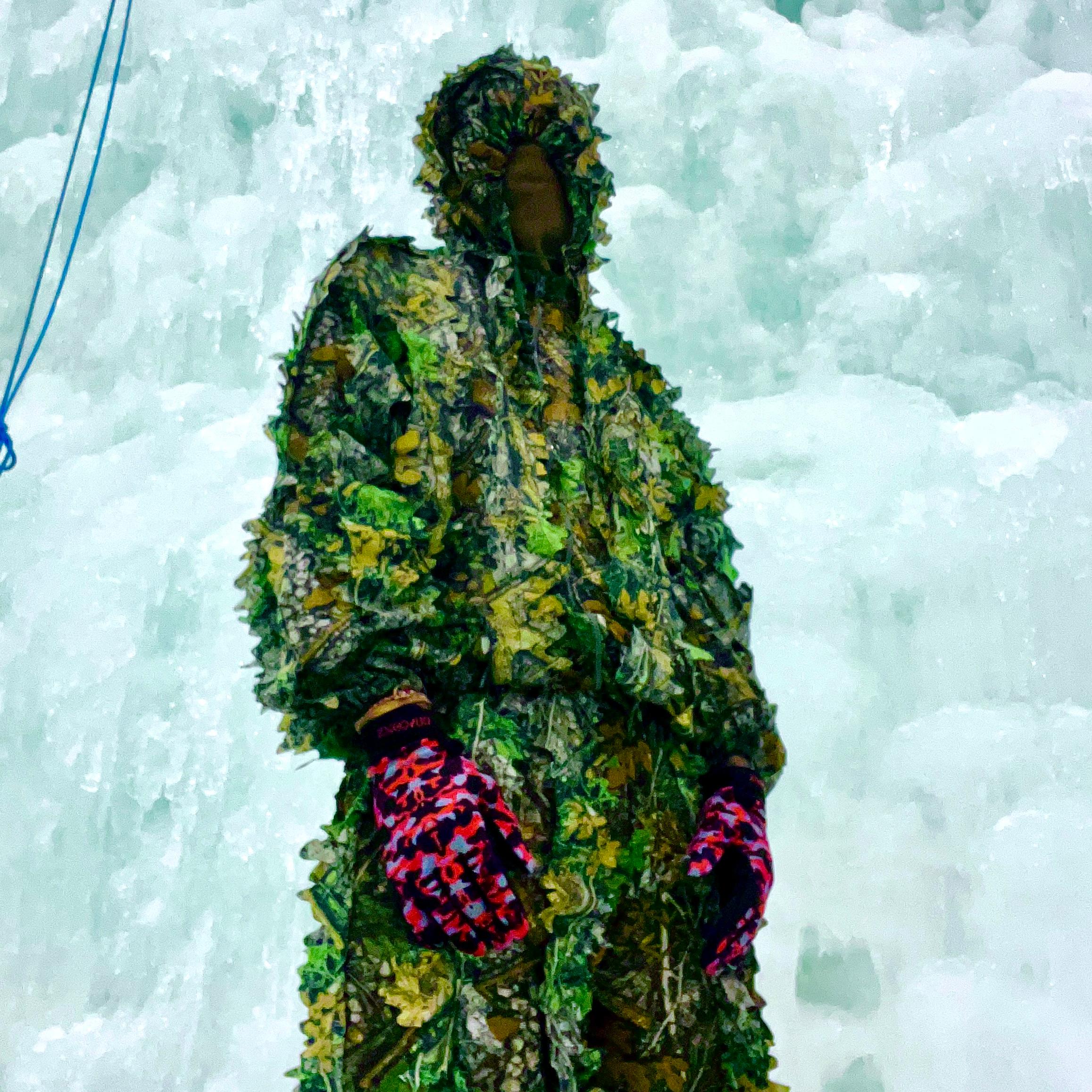
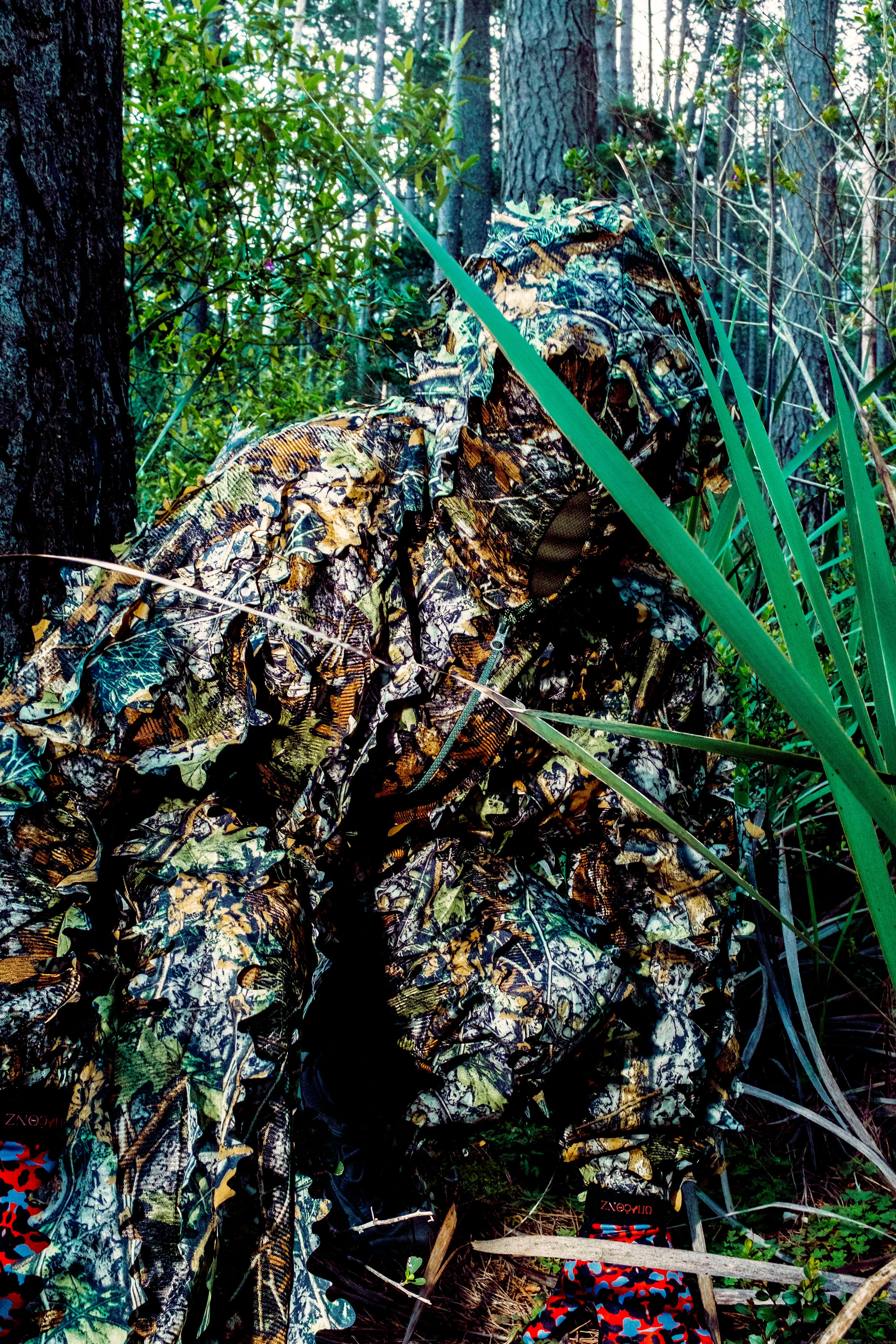
At first you might not see D[Nowhere]J at all. A figure covered head to toe in a shaggy ghillie suit stands behind the decks, looking more like a tree than a person. Then it walks off the stage and into the crowd. People stop their conversations and stare, and some reach out and touch it to check that it's real.
"For a split second they transport someone into the unknown and makes them a child again," their manager says. Then the reasoning catches up: "Oh no, okay. It has hands. It must be human."
D[Nowhere]J was built around that split second. There is no fixed face or gender behind the suit, and no single person either. "There's more than one D[Nowhere]J," their manager says, "and there will always be more than one D[Nowhere]J at any given moment in time."
Behind the suit is a story about Gqom, the hard, bass-heavy dance music out of Durban, and about the people who decided that if no club in Johannesburg had room for it, they would build one themselves.
The God of the Night
The person who speaks for D[Nowhere]J introduces themselves as the character's manager and creative director. They call D[Nowhere]J "they", and themselves "we". "In Zulu we refer to ourselves as plural," they say. "It's acknowledging that for me to be here today, there were so many other people that walked the line. You are always with your ancestors everywhere you go." The character takes that as far as it goes. Different people have worn the suit, it can be any gender from any time, and it can be in more than one place at once. "Even you could be D[Nowhere]J."
The idea arrived in 2019, on their first trip to Europe. One night in a Berlin club, their manager saw a dancefloor that ran from people completely naked to people completely covered. "After the shock, you realise it's beyond that," they say. "It's people on a human basis, stripped of worldly things and perceptions."
It connected to something they had been reading about since an artist residency in 2016, where a friend from Congo told them about the Vodun festival in Benin. One of its spirits is Zangbeto, the guardian of the night: a towering figure of straw that looks like a tree, which is lifted to show nothing inside, put back down, and then starts to move. Zangbeto protects people from evil spirits and from people who mean harm.
D[Nowhere]J borrows both halves. The suit hides race and gender, so the dancefloor loses its prejudice. And the protection is literal in its own way. "In the night there's so many things that could happen," their manager says. "But as long as you're dancing, the risks are a lot lower."
They usually play after midnight, when the crowd is already influenced, and people go "from 'what the fuck?' to 'is this real?'" When the suit waves back, the set has their full attention, and that is when D[Nowhere]J introduces them to a genre most of them have never heard. Many of their European club shows have a no-phone policy, so the only record is what people tell their friends the next day. "Some people find D[Nowhere]J six months later and they're like, 'I finally found you,'" their manager says, laughing.
The reaction is the same in daylight. When the crew shoots in public, a two-year-old and someone in their eighties have the same experience. Their manager compares it to The Prestige, Christopher Nolan's film about two rival magicians, and the moment it keeps returning to: the split second before skepticism kicks in.
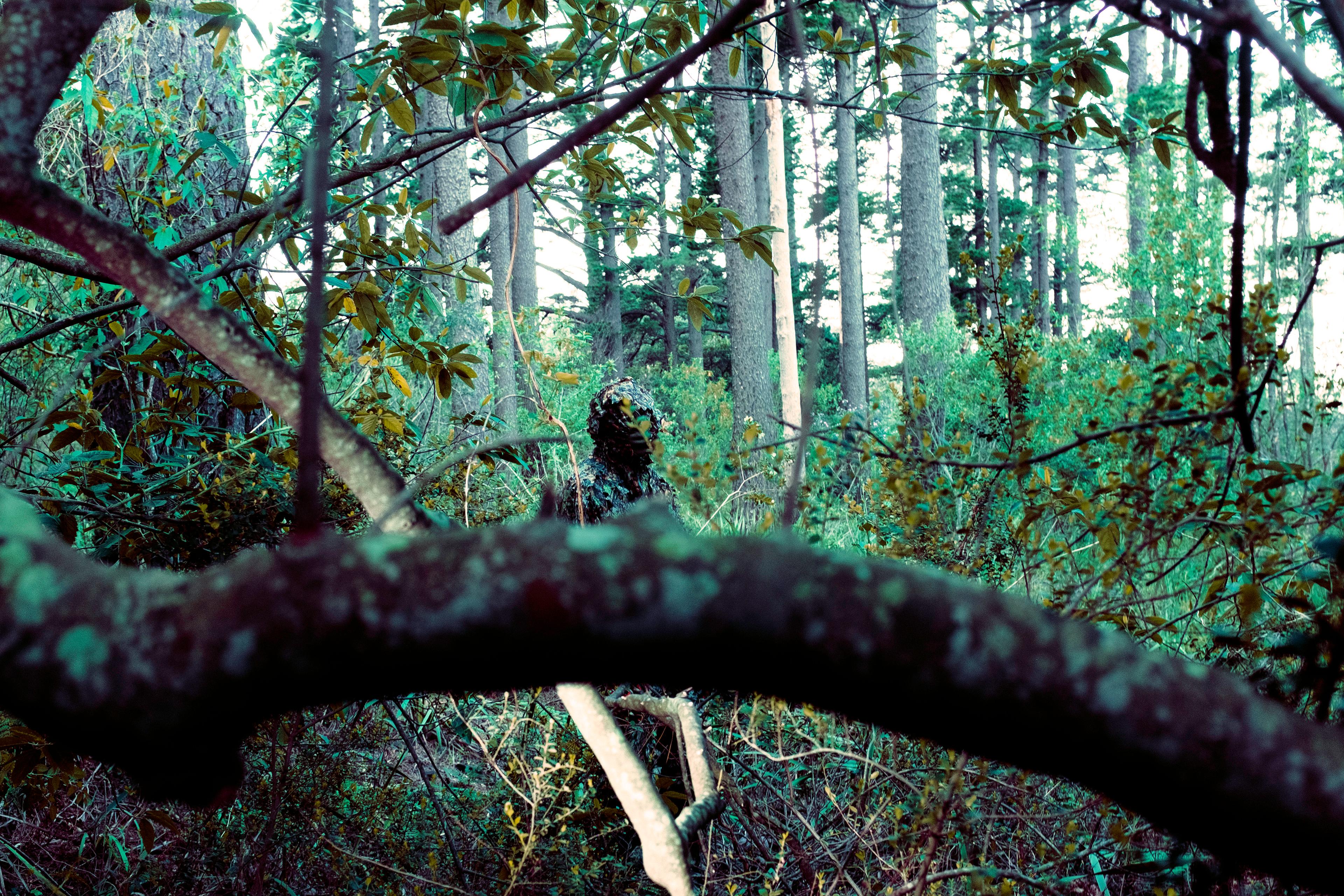
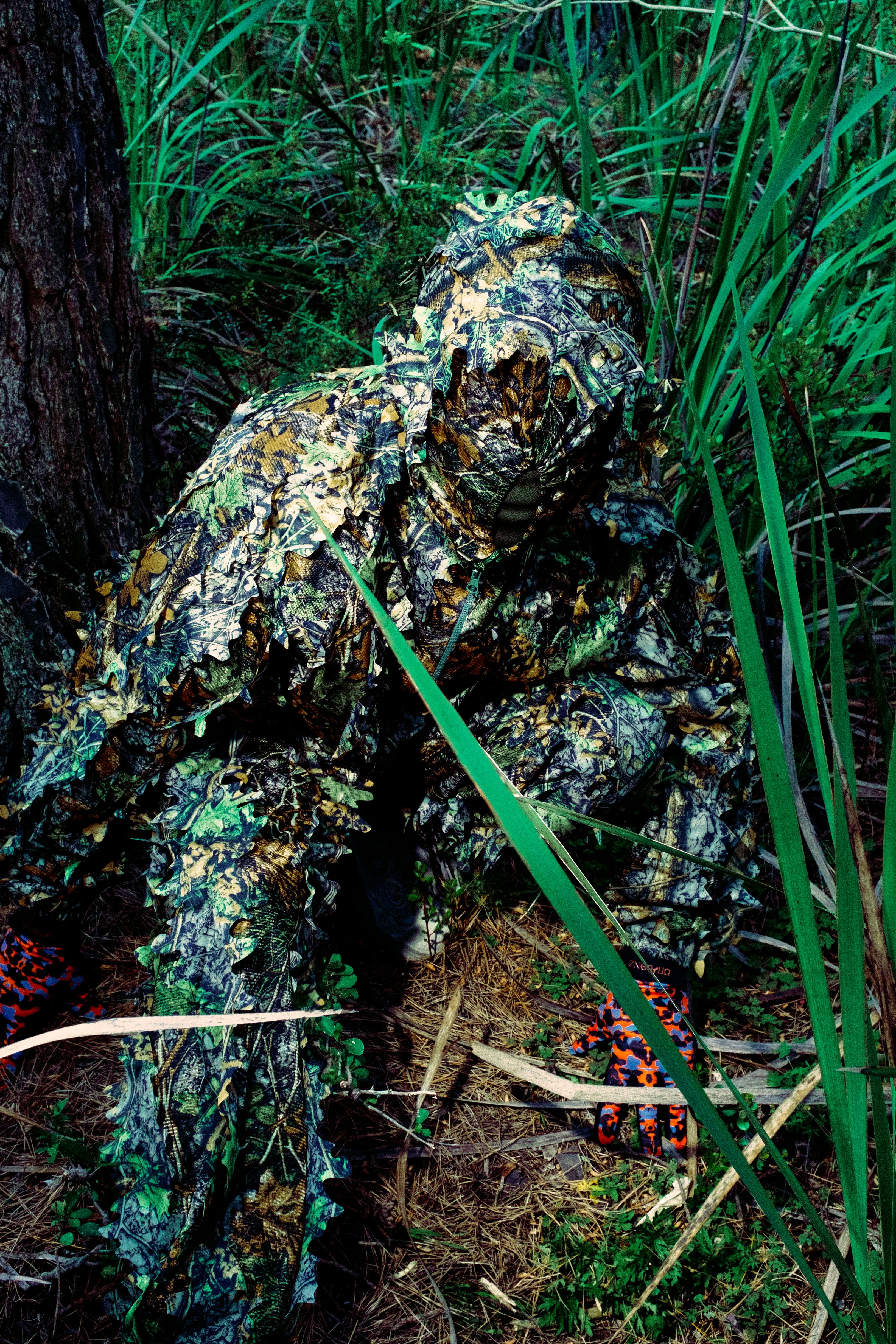
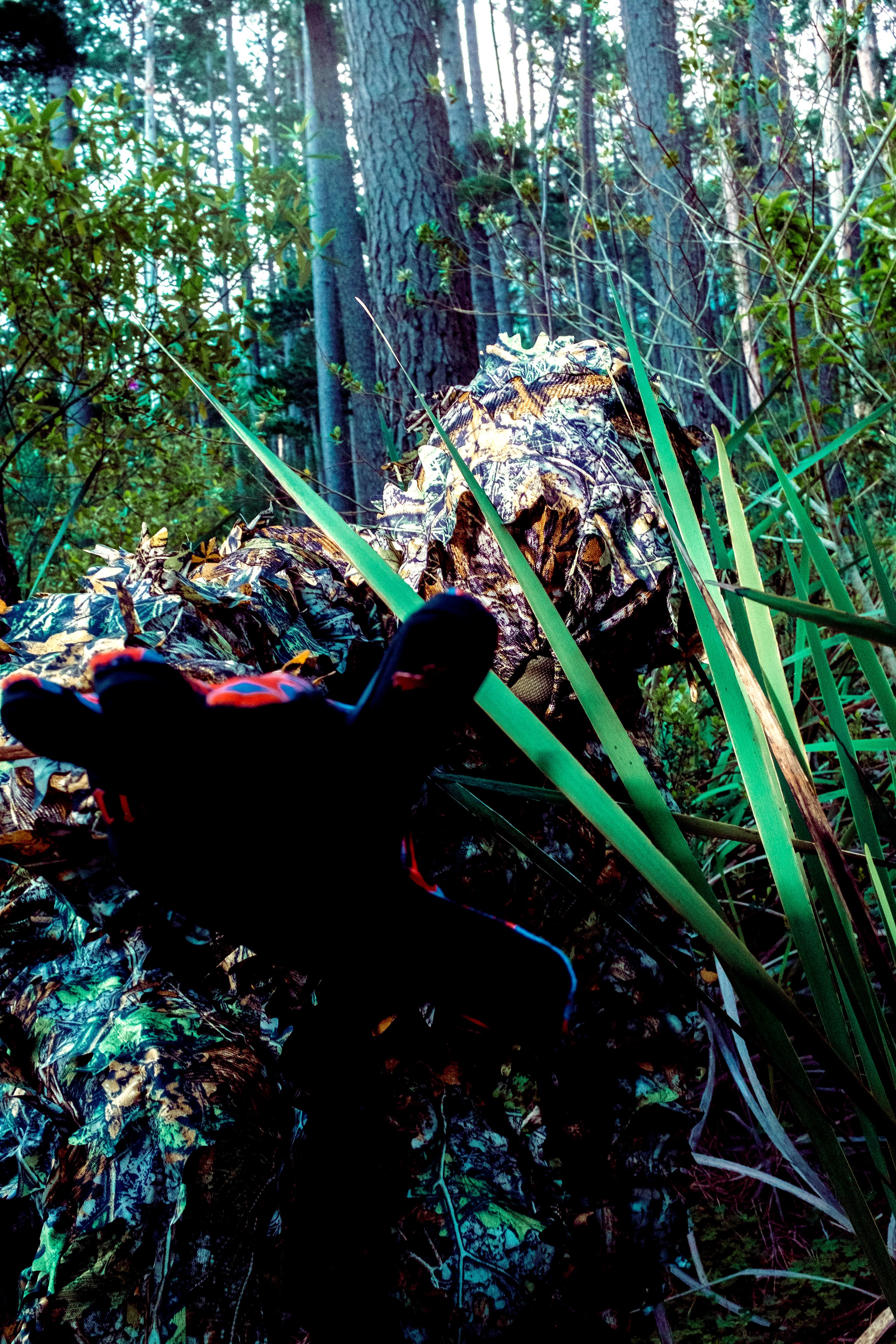
The name is built to work both ways, nowhere or now here. So is the suit, which was an accident. It was hanging in a Chinese mall, and only after buying it did they learn it was a ghillie suit, the kind photographers wear to wait out animals on safari. In a photo of D[Nowhere]J performing, you can look straight at the frame, think it's empty, and then find them, and once you've seen them you can't stop seeing them.

From Metro FM to China
The music started in their grandparents' house. Every Sunday from the age of three or four, the radio was on Metro FM, playing American soul: Aretha Franklin, Marvin Gaye, BeBe & CeCe Winans. The adults cleaned and sang along word for word.
At ten they were old enough to sneak into the arcades, which were mostly inside taverns, and that was where they heard kwaito. Around then they saw what they now call the first D[Nowhere]J: Mzekezeke, a masked kwaito character who wore an orange prison jumpsuit in solidarity with the guys locked up, and a balaclava under a bucket hat. "He was polarising. He said any and everything that was on his mind," their manager says.
What they had always wanted, since obsessively drawing Dragon Ball Z at five, was to be an artist. In high school their taste got so specific that they couldn't find it in shops, so they started printing their own T-shirts, and the T-shirts led them into a collective called The Uniconz. The Uniconz taught them branding and how to actually make clothes, and they showed at fashion week. Styling a shoot led to art direction, and art direction led to working with Riky Rick, one of the biggest rappers South Africa has produced.
"That guy was a superstar," their manager says. On stage Riky Rick could point in a direction without saying a word and a whole crowd would squeeze itself that way. He also gave them the maths that got them on a plane. Spend 2,000 rand on a weekend out, and four weekends is 8,000. Book early, and a return flight to Europe could cost about 8,500. In 2014 they and a friend went to China. "Imagine selling T-shirts takes you to China," they say.

China changed how they thought about art. With limited access to the global internet, the references there weren't algorithmic. "Whether you're in Joburg, Berlin, Mexico or America, at some point there's a streetwear brand referencing Virgil Abloh," they say. In China, one exhibition was a video game about the country's gods, and down the road from it stood a coin-operated dustbin with a gallery inside.
The Gqom Bug
Europe came five years later, in 2019, and with it techno. In Berlin, hearing hard music played seriously in a club, they recognised something from home. "Oh wow, this actually sounds like Gqom," they remember. They flew back and went digging.
Gqom had been their first love, but at home it had gone quiet. Kwaito had been declared officially dead a few years before, local genres were fading from the radio, and Gqom's touring names, DJ Lag and Phelimuncasi among them, were playing Europe more often than South Africa. What brought it back for them was a new wave from Durban: Unticipated Soundz, the Newlands West collective that Zvri, Kiing Bhutie and many more came up in, and the Omagoqa trio. Its women's side, UntiChicks, provided the lyrics and chants, known as "Themes", on the earlier records. The new sound was darker and heavier than the earlier Gqom, which had leaned on the rhyme patterns of Durban kwaito.
That wave came out of high school. At the end of every term, Durban kids still hold Umqhumo, which means explosion. They pile into Quantum minibus taxis that take them to a location only the drivers know. With no money for a club, the taxis park in a lot by the beach and each one becomes a room, with a DJ playing off a USB stick. If a popular DJ was in one taxi, people kept squeezing in until nobody could move.
A Vice documentary covered it, and their manager thinks it missed the point by focusing on drugs. "What's actually happening there is high school kids with limited resources, using what they have to make music," they say. When people worked out that "Mercedes", one of Babes Wodumo's biggest songs, was Zulu slang for ecstasy pills, it became a PR crisis. To them, these were rock stars in the line of Brenda Fassie, the controversial queen of South African pop.
The harder part was finding the music at all. For a generation that grew up without much internet, radio decided the whole country's taste. Music stores sold old South African classics but nothing current. Most Gqom producers couldn't afford to get their music onto streaming services, so the tracks lived in WhatsApp groups and, with the right search terms, in the depths of YouTube.
Every Door Said No
They wanted to hear this music out more often, so they asked a friend from primary school who ran a DJ school if they could learn. That DJ school, as their manager tells it, is where they met D[Nowhere]J, and the friend became D[Nowhere]J's sensei. Soon after, they found the suit.
Then they knocked on doors. "Nah, it's not for us. No, it's too heavy. Not this space." Even at DJ school, people told D[Nowhere]J to open up to other genres. They kept playing Gqom. "That sound has little to no articulation," their manager says, "but it brings about a spiritual experience within people."
When nobody would book it, they built their own party. They called it UMGQIBELO, Zulu for Saturday, and started it with sibaTHATHU, a Johannesburg DJ trio whose name means "there are three of us". It ran at Club AM, a club run by old high school friends, once every two months, while they worked out what they were doing. Their background in marketing and art direction told them what Gqom was missing.
“Most South African genres don't have platforms. And beyond platforms there's no archiving, so our stories always get told from a Western gaze.”
— D[Nowhere]JUMGQIBELO brought Kiing Bhutie, Amaghost Obusted, La Ace Musiq, Omagoqa (already based in Jozi at the time) and other Durban artists up to Johannesburg, for many of them their first gigs outside Durban. They caught the city's gold-rush energy and later moved there. Gqom Therapy started holding similar nights around the same time, and soon Alpha Rocks and Friends of Gqom had their own.


Right after COVID there were no Gqom parties in Johannesburg. About four years later they were regular, and for the past two years there has been one almost every weekend. In Cape Town, the venues that turned them away now host Gqom events with Gqom DJs. "It could be a no, but sometimes that no could turn into a yes, if you're persistent enough," their manager says.
That growth is also where D[Nowhere]J learned to produce. Kiing Bhutie and Funktone let them sit in on sessions as flies on the wall from day one, and Kiing Bhutie went further and walked them through the process, which he didn't have to do.
A Field Guide to Gqom
Most people outside South Africa know one version of Gqom. Their manager can name seven.
Dombolo, from Durban, is the bright, joyful one. The name means dumplings, and Europeans say it sounds like amapiano but faster. Its vocalists still rhyme like Durban kwaito.
uThayela, the sound Unticipated Soundz pioneered with Optic Dokotela, Permitted Gang, Shibilika Mandoza and Wa Wah Pman, and that the Durban wave carried to Johannesburg, is named after corrugated iron, the material used for backrooms at home. Inside a Quantum taxi full of bass, the sheet metal rattles. The music sounds like the bass is pushed too far and the speaker is broken, and it does that on purpose. At festivals, sound engineers think the volume is clipping.
Isqinsi grew out of uThayela, darker and closer to electronic music, and Omagoqa, Funktone and Kiing Bhutie are among its names. Omagoqa, who play both, describe it as an infusion of uThayela and electronic elements. Gqomtech, also called EGM, goes further and sounds like electricity. The best example they've heard is "Distortion" by Zvri. Griffit Vigo and Novaboy are adding to it too.
Cape Town has its own strain, Afrikaans x Gospel Gqom, more melodic with the Afrikaans (a Dutch-derived language) vocals up front, and full of organs and close to a church song.
There's Sghubu, a term derived from the Zulu word for a drum, which is a hybrid style bridging traditional Gqom and upbeat kwaito-influenced house grooves.
And lastly Umgido, with Pro Tee spearheading the movement. It borrows its influence from a traditional ceremony by the same name, for healers post initiation, and features heavy drums, rhythmic arm swings, and synchronized group leg movements or clapping.
An Archive Nobody Else Was Keeping
While UMGQIBELO was finding its feet, sibaTHATHU found Oroko Radio, the Accra-based online station, and its hosted mixes. UMGQIBELO now has its own show there. That planted the idea of going overseas. They saved money, DMed promoters on Instagram over and over, and put together a first mini tour for D[Nowhere]J and sibaTHATHU: Berlin, then Cologne, where a pair of promoters introduced them to online radio properly.
They came home convinced this was how to archive Gqom. With a fourth member, Ralph Warren, on visuals, they found a streetwear store in Melrose with a controller in it, asked to record mixes there, and started Gqom Mixtapes, an online station that plays nothing but Gqom. New DJs use it to study the different sounds, and fans use it to find artists in a genre that is hard to Google because almost nobody writes about it.

UMGQIBELO itself runs at about 75 percent Gqom. The rest is space for other African electronic music with nowhere else to go, like lekompo, afro tech, 3-step, batida and kuduro. "Outside of amapiano and house, you can't really listen to much else back home," their manager says.
Travel also showed them Gqom growing in places they didn't expect. TYO GQOM has held the sound down in Tokyo for eight years, and celebrates its anniversary every 28 November. In 2025 they hosted the release party for D[Nowhere]J's debut album, IYAPHILA, together with UMGQIBELO, and the weekend after, UMGQIBELO hosted TYO GQOM in South Africa. One of the Tokyo DJs, KEITO, finger-drums live on an MPC next to the decks. The Johannesburg crowd, people who hear Gqom almost every weekend, had only seen that in a studio. "The people that inspire him are now inspired by him," their manager says.

A Voice Changer From Facebook Marketplace
None of them are musically trained, so the live show is worked out in public. They saw hostages with disguised voices in a film, learned that voice changers exist, and found one on Facebook Marketplace. Every show since has been a test: the pitch too deep, too distorted, nudge it up. At a recent show the pitch jumped by accident, and they kept the high voice for the rest of the set.
"It almost feels like D[Nowhere]J is a kid in a toy store, constantly discovering new sides of the toys," their manager says.
Watching other artists in Europe taught them about nerve. "We won't make it easy for you because you want it to be easy, and we won't make it palatable for you because you want it to be palatable," they say. "But we will give you the best version of the experience that we can."
Most DJs have a fourth wall, and the decks are it. D[Nowhere]J walks through it and dances with each person in turn. Their manager points to Marina Abramović's The Artist Is Present, where she sat at a table for months and strangers queued to sit across from her. Some cried and some got uncomfortable, but for the length of their turn nobody was anywhere else.
Open the Floodgates
Asked whether Gqom risks oversaturation as more kids pick up a laptop and start producing, their manager says that is exactly what it needs. Amapiano had to be everywhere to become amapiano. They credit State OFFF with laying hard groundwork by finding a middle ground between European EDM and Gqom, which opened the door for more European and Japanese artists to try the sound.
"Every business is the same, whether you're selling art or soap or water," they say. "The more people see your T-shirt, the more likely they want to wear it." On a trip to Las Vegas they heard Tyla's "Water" almost every hour from 8 a.m. until 3 a.m. "Oversaturation is basically another word for a billboard."
The producers are already flooding the market, and Bandcamp has become their storefront. Most of a Bandcamp sale reaches the artist, and some Gqom producers now make a proper living there. "Your store needs to have stock," they say. "If your store doesn't have stock, it goes quiet."

The tour that brought D[Nowhere]J to Berlin, sixteen hours from Johannesburg and on through Europe and Asia, is part of the same plan: open doors abroad the way UMGQIBELO did at home, so more artists can follow. They want kids from KwaMashu, Soweto, Potchefstroom, Gqiberha and Cape Flats to see it can be done, and to feed their families from it.
Looking back over the conversation, they line the people up: the primary school friend with the DJ school, Kiing Bhutie, Funktone, sibaTHATHU. "All of these people," they say, "are representations of D[Nowhere]J at different points in time."
"When we started with sibaTHATHU, we were moving blind through the bushes," their manager says. "Now the road went from a bush to a dirt path, and slowly it's starting to become a road you can see a clear path on, and we are taking everyone with us."
Photography by Onkgoposte May and Sandile Mhlongo.