
Aunty Cece·Ethiopian-German / Stuttgart→Berlin
DJ and co-founder of the Scrap Yard party series
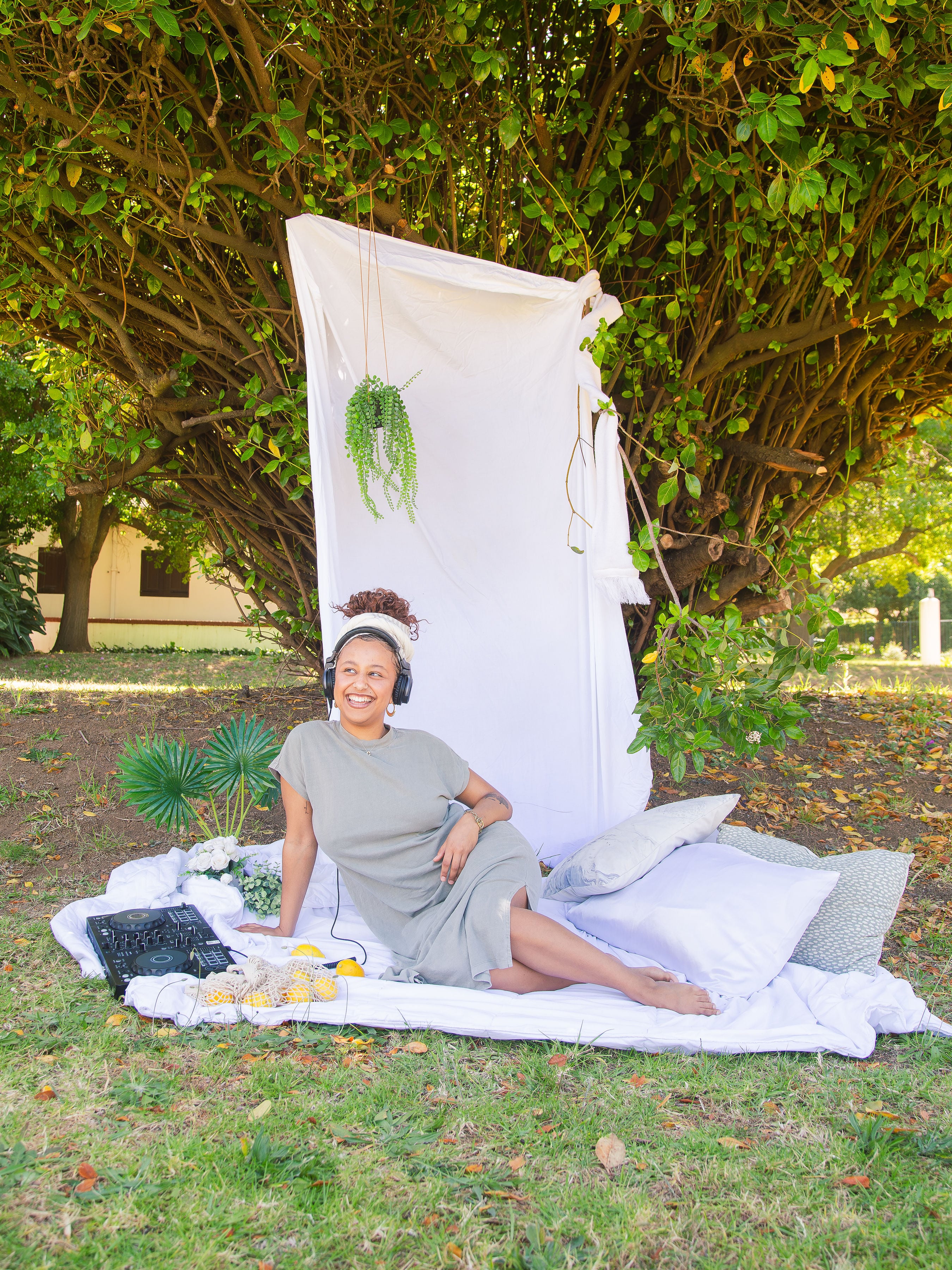

Aunty Cece started DJing in 2024. Two years in, the ambition she talks about most is to get herself off the stage and hand it to a smaller producer instead. It's a strange thing to want this early, and it goes back to one night in Amsterdam. Late 2022, a packed two-hundred-cap room at Pianoland: she's sober, and it's hitting her like she isn't. Loxion Deep is playing, deep house with the piano running under it, and the whole room is moving with its eyes closed. She wasn't a DJ yet, just another person on the floor.
The album was Children of the World. It was the middle of winter, but the room was hot, and no one left before four. "It was the first time I went out and it was really only about the music," she says. "Everyone was in it together." She walked out hooked.
What she fell for is South African dance music, and she flags the catch herself. She is Ethiopian-German, not South African. "I'm African, but I'm not South African," she says. The sound has given her more than almost anything, and she wants to pass it on without it curdling into a trend or becoming about her. That tension runs through everything she builds.
She was born and raised in Stuttgart. Her father came to Germany from Ethiopia in the eighties, Orthodox, and by her read more focused on being accepted than on handing his culture down. She doesn't speak Amharic. The house was thoroughly German and the family dynamic was hard. In a school of eighteen hundred there were maybe five Black kids, and her friends were Turkish, Greek and German. "I had very few Black people around me," she says.
Politics had gripped her since she was twelve, so she went into a political science degree expecting it to give her something. It gave back less than she put in. The same parties have sat in the German parliament her whole life, she points out, and representation for Afro-Germans looks to her about where it did thirty years ago. She decided not to spend herself on something that mostly drained her. The energy goes into music instead.
She did that degree in Amsterdam, in English, having barely seen the place, as a freshly turned nineteen-year-old. It was the first time she had lived far from home. "Amsterdam was my first real home," she says. She found her way into an African students' association at the city's other university, ended up sharing a flat with someone from it, and her whole world opened. For the first time she was surrounded by people who looked like her. "When you don't have anyone around you who makes you stronger, and your whole environment tells you the opposite, you start to doubt yourself," she says. "I knew it rationally. That was the first time I felt it." Her one tattoo dates from then: two trees and a trampoline, the view from that flat's window. It marks the place, not a person.
No one in the house growing up was musical. Her father kept his cassettes to himself. So she built her taste alone from about fifteen, starting, she admits, with German rap, then going deep on UK rap. Loyle Carner is still her favourite. Afrobeats came in Amsterdam, every weekend, and then, late in 2022, amapiano.
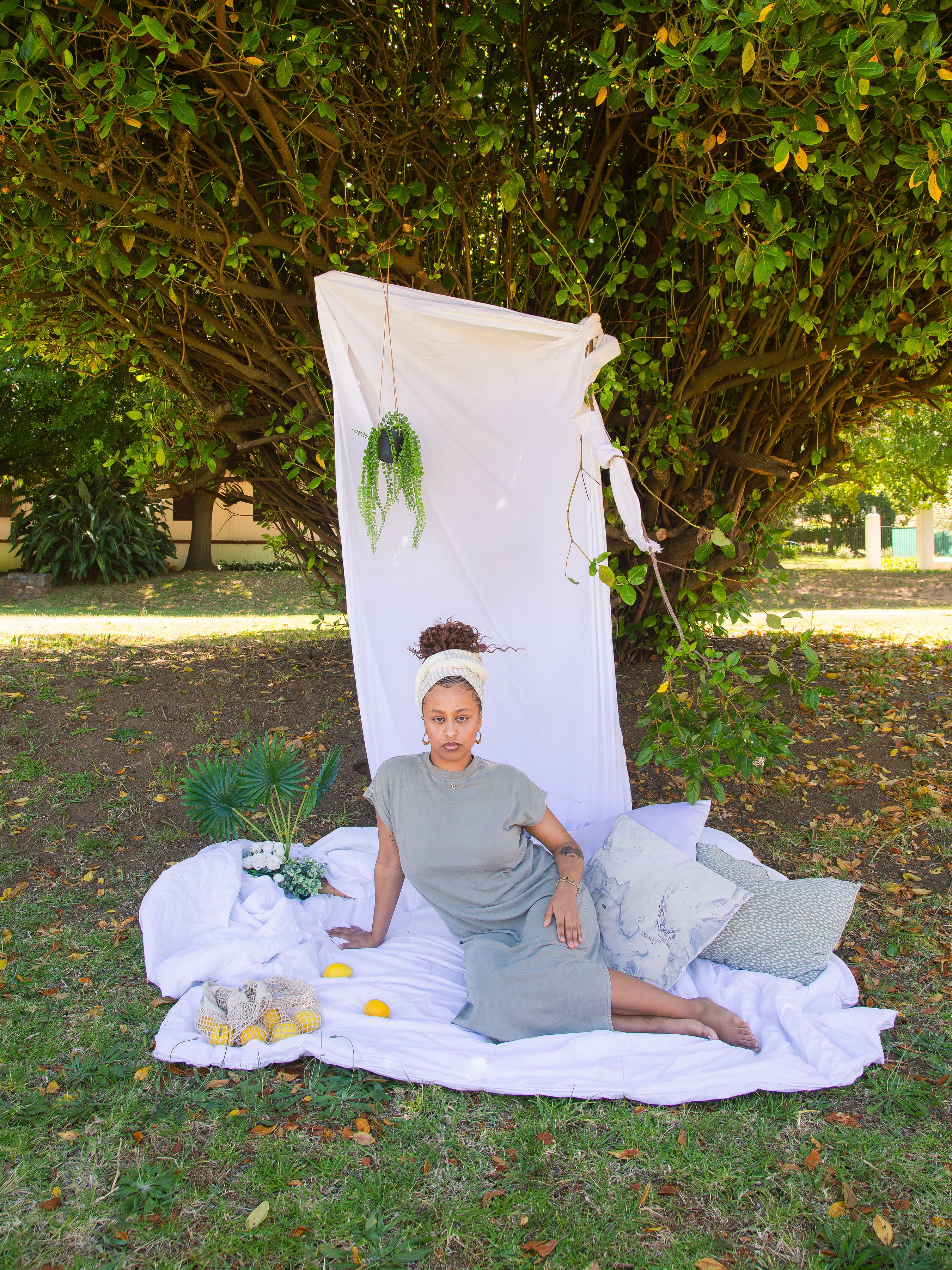

Midway through the degree came an exchange semester. She wanted Ethiopia, but there was no partner university there, so she took Cape Town: six months, the closest she could get to heritage. South Africa cracked the sound open the rest of the way. Out there she would not recognise sixty percent of the tracks in a set, and that was the thrill of it. Being inside the scene there did not only open up Afro electronic sounds to her. It also let her hear the range inside the South African music community, which has artists in every genre you can think of: hip-hop running into punk, neo-soul, traditional music, Afrotech and the deeper houses. "There's everything," she says. "I'm still exploring it."
She ran with friends from Cape Town and Johannesburg, in the small student spots rather than the bougie clubs, and found a feeling there she had not had anywhere else. "It was a real togetherness," she says. "I danced with random people I never spoke to again. My friends there want to see me flourish." That is why she keeps going back. Those same friends made her most recent press pictures: Oliver Zwirava shooting and editing, Amandla Dlamini on direction and production, Craig Mangachena and Siyambonga Magocoba assisting.
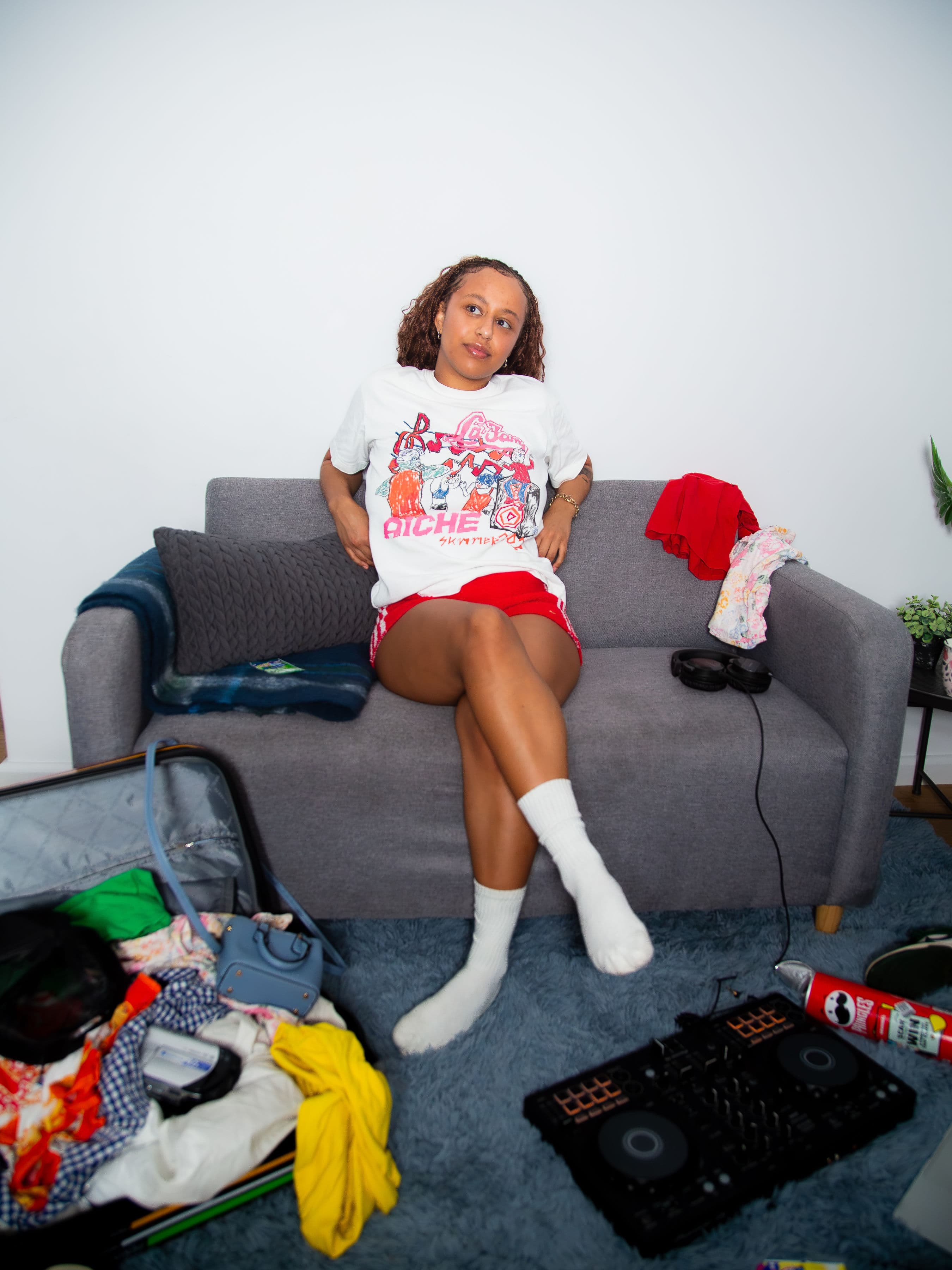

The DJing arrived late and almost sideways, in the middle of 2024. Her Cape Town university had a DJ society, but the organiser was away that semester, so she messaged a former teacher through its account. He ghosted her for six months, surfaced four weeks before she flew out, and taught her the basics in two. He loaded ten or fifteen songs onto her USB stick, most of them Private School, the slower and jazzier amapiano made for lounges. She bought a controller and played in her bedroom.
"When I started, it felt like a puzzle piece clicking into place in my brain," she says. There was no pressure, because she was playing for herself. That is still why she plays.
My family situation was never great. The music is a refuge. My head goes still, and I can just enjoy how I feel.
— Aunty Cece
The first gigs came the same accidental way. Back in Cape Town for an internship, her friend Amandla Dlamini heard one of her sets while they were getting ready to go out and asked her to play. Relaxed Sunday sets in a restaurant first, then a small house night. "I don't think I would have asked for it," she says. "It just happened."
She moved to Berlin last October for a master's in public policy, but between trips back to Cape Town and the holidays she only really landed at the start of the year. The bookings came the way they always do for her, by putting herself in front of people. The Coffee Rave gig started when she went to one of their events because it looked good, found the guy running it, and told him she DJ'd too and was keen. "He didn't know me, I didn't know him," she says. "It could have gone wrong. And if it hadn't worked out, fine. Then it just wouldn't have been my space." The nerve comes from moving so often that she was always the newcomer somewhere. "If you don't put yourself out there, how are you ever going to get a gig?"
In Stuttgart, she says, doing something purely because you love it gets you laughed at. Why not finish your Abitur, study business, go work at Daimler. "I never had that in the Netherlands," she says, where the cultural sector is broad enough to run traineeships for young people who want in. The drive and talent she found in South Africa, she says, never get the openings they should.
Scrap Yard is her answer to that gap. She co-founded the party series with NSIMBI, a young Cape Town DJ and close friend, after the two of them bonded over shared frustrations, including uncomfortable experiences with male promoters that they wanted a night of their own to push back on. The first edition happened in Cape Town, freestyled, plenty going wrong. The first Berlin one came together fast, with help from Ubuntu Boyz and Jamilo and others in the scene. She wants to run another edition in August, even while she still feels new and without a settled team.
The longer goal is to take herself out of the booth at her own parties. "I want Scrap Yard to become a platform for the sound, and for the smaller producers," she says. Because she is not from there she stays careful with it. She knows the advantages land on her, the bookings and the unfamiliar sound, and she would rather turn that into a door for someone else. "I've never seen so much talent in one place," she says. "People making sick music on a laptop at home. There just aren't the opportunities there should be. If I ever get a bigger stage, maybe a smaller producer gets theirs through me." Further out she wants to build Scrap Yard into something closer to a foundation, so part of whatever it eventually earns can go back into the creative scene in South Africa.
“If I ever get a bigger stage, maybe a smaller producer gets theirs through me.”
— Aunty CeceBetween her back and a chronic inflammatory condition, she is usually spent after about two hours, even when the music could carry her further. She has made that limit part of the craft. She likes knowing the length of a set before she starts, because two hours is enough to take her time and still land on a clear end. It is a risk, she admits, because the slow rise asks the floor for patience before it pays off. A track from her very first set still turns up in her newest one. "I think all my sets are connected," she says. "I take something from each one into the next." She keeps the pressure low, because the music never sits still, and goes on chasing that sober Amsterdam feeling to hand it to whoever is on the floor.