
MARÍAJOSÉ·Colombia / Ratingen, Germany→Berlin
DJ
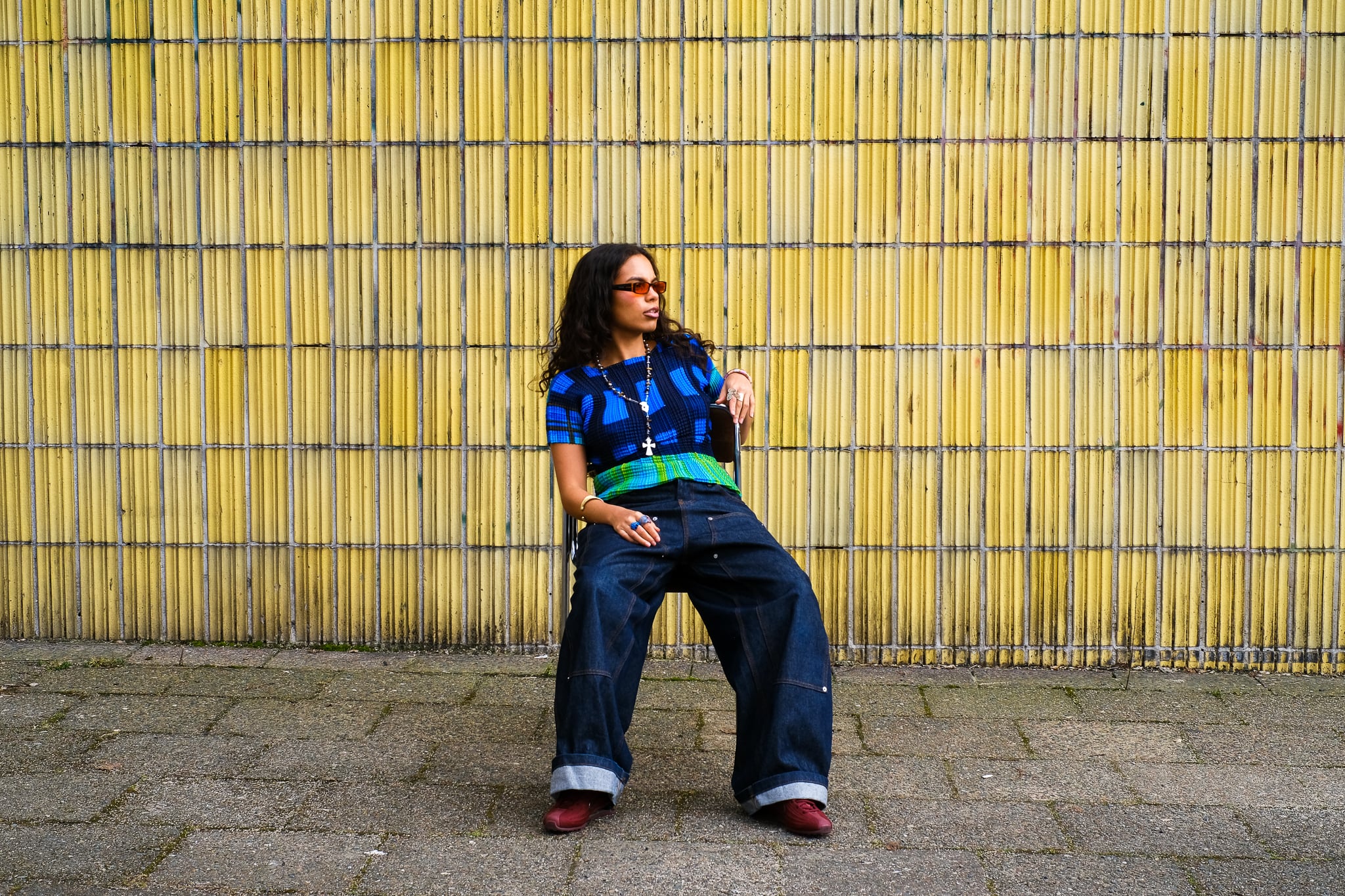

When Maríajosé was five or six years old, her mother, barely 26 herself, would fill their home in Ratingen, a small city near Düsseldorf in Germany, with the sounds of Tupac, Biggie, and Eminem. She sang with her grandmother, danced with her, played congas together. Aaliyah was her mother's favourite. JLo was her mother's call too. No one sat her down to teach her. The music just did. By the time she was thirteen she had already moved through more musical decades than most people visit in a lifetime: Nina Simone, Etta James, Frank Sinatra, then forward through the eighties and nineties into whatever she could pull from a YouTube converter.
She didn't plan to become a DJ. She didn't plan much of anything. But she had always had a good ear, and she trusted herself to find the right song for any room.
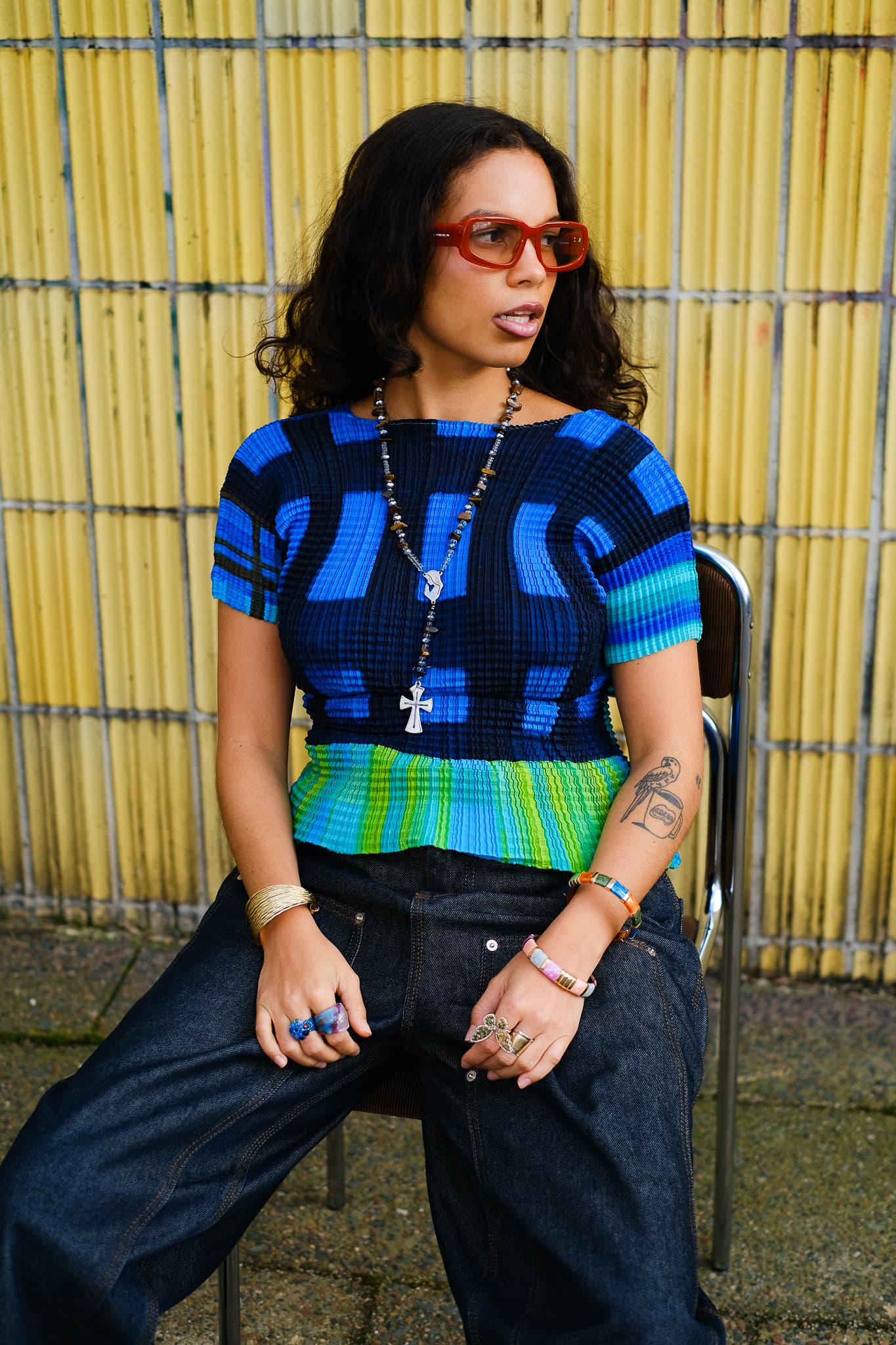

Two and a half years ago, a friend lent her a controller. She kept it at home for a couple of weeks. Then someone put her on a stage at Aeden in Berlin, a summer festival, maybe two hundred people, and she had no idea what beatmatching was. She had a tracklist of songs she thought were good. A friend helped her through the rough patches. She left the stage convinced it had been a disaster.
A few weeks later, friends threw a party at Suicide Club (now Lokschuppen) in Berlin. They asked her to play again. She showed up with her own fifteen-kilo Traktor controller and a university laptop. She was scheduled from four to six in the morning. The hours before her set were unbearable. "I couldn't enjoy the party with my friends beforehand, and I couldn't enjoy it after," she says. "I thought I was going to collapse." She describes it plainly as a panic attack, too much attention, too many people wanting to talk. She decided she was done.
For nearly two years, she didn't touch any equipment.
The restart came in Barcelona. She'd gone alone, just to get out of Berlin for a few months. Somewhere in that quiet, the thought resurfaced: she needed a hobby. Not necessarily DJing, just something. But the question kept circling back. Why did I stop? She had been getting better, even on Traktor. The instinct was still there.
Back in Berlin, she spotted a workshop from one of her favourite collectives. They wanted applicants to submit a set. She didn't have one. She recorded something on the old Traktor controller, uploaded it to SoundCloud, and sent it in. Two days of training, one on Recordbox theory, one on CDJs. The rest, she taught herself. When she got stuck, she talked to ChatGPT. Literally spoke to it, out loud, on her phone. "Why is this blinking? Why does it sound like that? Where's the button?"
Her first real booking came from a recommendation, a Latino party called Fania Brava. She played on CDJs for the first time in front of a full club with all her friends in the crowd. She thought, Whatever happens, I'm doing this now. And it worked. Then she left for two months in Colombia and did nothing. When she came back, the bookings started, and she realised she was behind on skills she hadn't yet built. She has been catching up at full speed ever since.
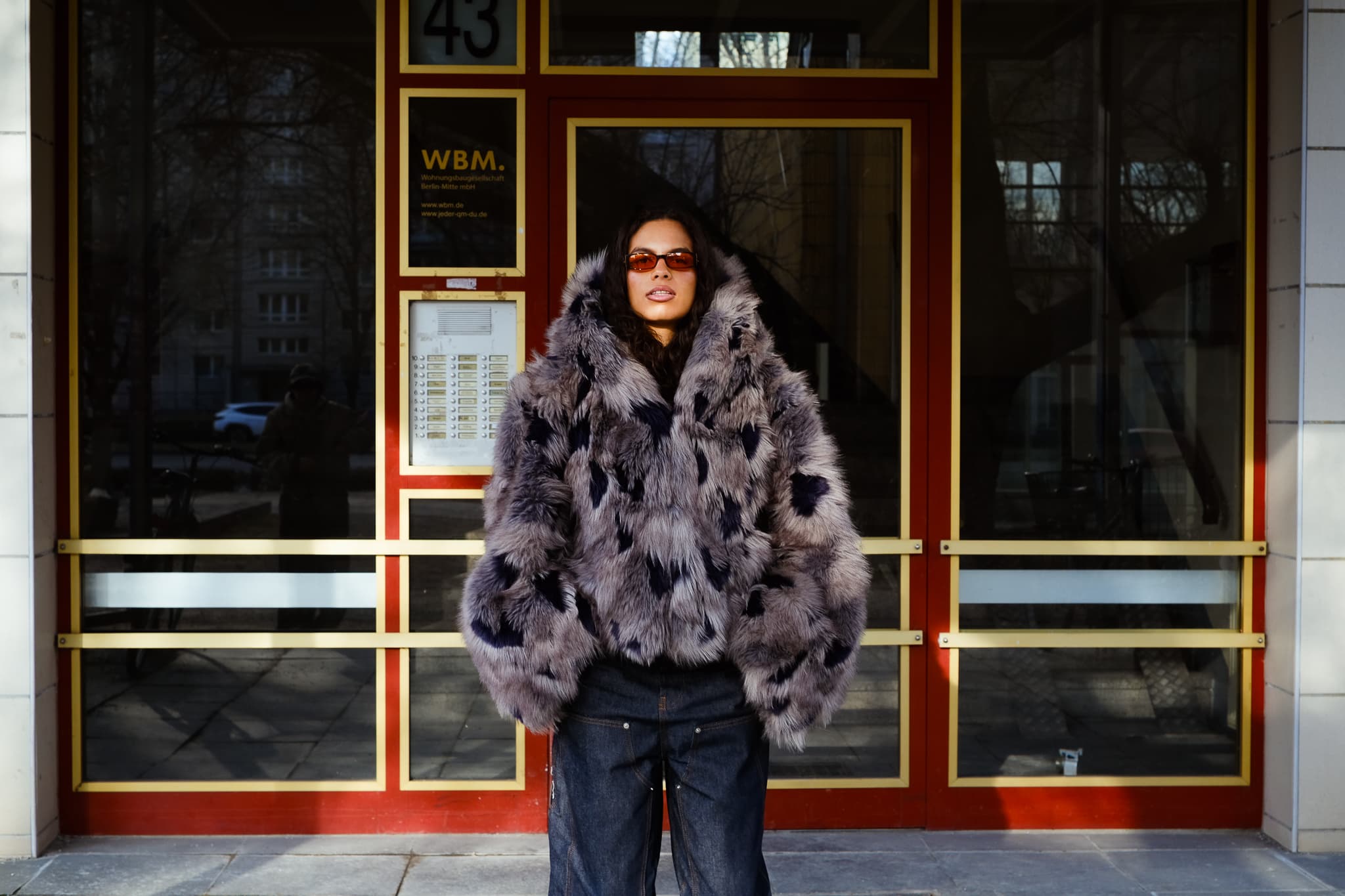

Maríajosé puts enormous pressure on herself, and she knows it. She wants to be better, faster, more technically skilled, and she knows that pressure isn't always kind. She's cried after sets that audiences loved. Once, a recorded set made her so unhappy she wrote to the organisers offering to re-record it at home. They had already rebooked her. The brand at the party thought she was excellent. She was at home, in tears, certain she had failed.
She goes to therapy. Not because of DJing, she started before any of this, but lately the sessions are mostly about DJing. How to handle the pressure. How to sit with herself after a gig, alone in her bed, processing what just happened. She doesn't drink before or during sets anymore. Early on, she'd have a drink because her friends were drinking, because the setting invited it. Afterwards, the anxiety was always worse. Now she stays sober. "You don't go to work drunk," she says simply. "Just because it's a party at three in the morning doesn't mean I have to be as drunk as everyone else."
She also has people around her, and she's clearly grateful for them. Her boyfriend. Friends who handle her bookings, photography, and social media, all of it on top of the day job she still works. And the women in the scene, who caught her with open arms from the start. Bigger DJs sending messages, offering studio time, answering questions. She thinks women bring more energy on stage. They actually look up from the decks and connect with the crowd. "We scream, we dance, we perform," she says. "The men don't always do that."
“There's room for everyone. At your own pace.”
— MARÍAJOSÉSomeone told her something that stuck: there's room for everyone. At your own pace. She used to compare herself to others who started at the same time and seemed further ahead. Now she lets it go. "Maybe that party wasn't meant to be mine yet," she says. "Maybe it's coming."
There is one part of the job she has not made peace with yet: the phone. She posts. She films. She has a nineteen-year-old cousin who cuts her TikTok videos in five minutes flat, which helps. But coming up with concepts, writing captions, cutting a thirty-second clip from a set that took hours, she hasn't figured that part out yet. "I have fifty followers on TikTok and a thousand views," she says, laughing. "I post because apparently that's what you do in 2026."
She's thought about it enough to have a real position. Being a good DJ and being good at content are completely different things, she says, and she's not interested in pretending otherwise. "TikTok is a side product," she says. "You can go viral and still be bad at this. Followers don't tell you who's actually good."
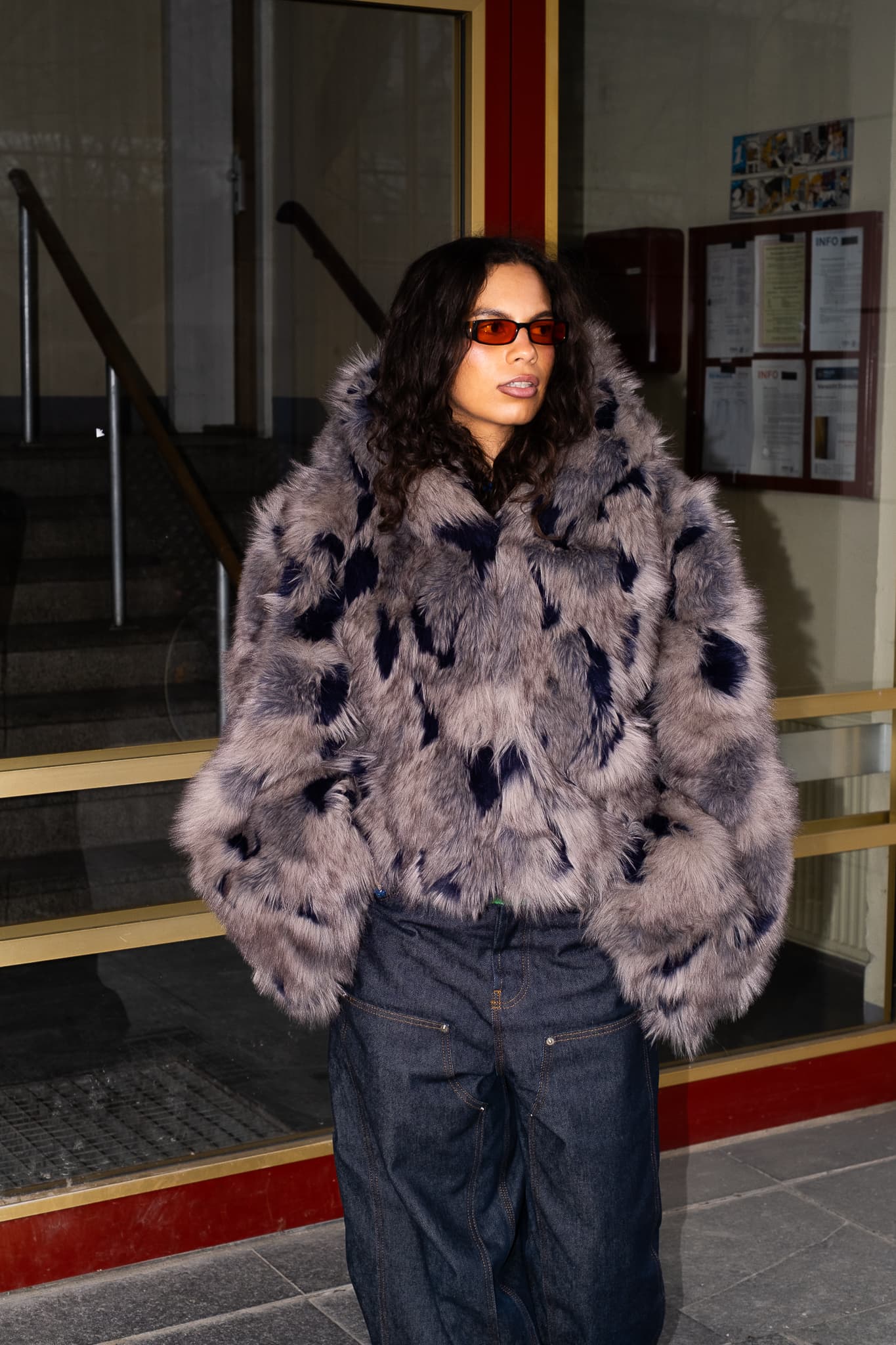

Her grandmother in Colombia receives videos after every big night. She doesn't entirely understand what's happening, "Are you a superstar in Berlin already?", but she sends voice notes back. Her and grandpa, so proud. Her mother, in Colombia, follows everything on social media with a devotion that borders on fandom. There is a family group chat, all women, where the highlights land after every gig.
When asked why she keeps going, Maríajosé doesn't reach for ambition or legacy. She reaches for something simpler. "I feel like I'm here to make music," she says. "I want to show people what I can do. I want to give them a good time. But I'm not an influencer. That's not what this is."
Somewhere in Colombia, a phone buzzes. A new voice note: You're doing everything right.
Photography by Meret Freisen