
EUNICE·Wuppertal, Germany→Berlin
Afro Electronic / Amapiano
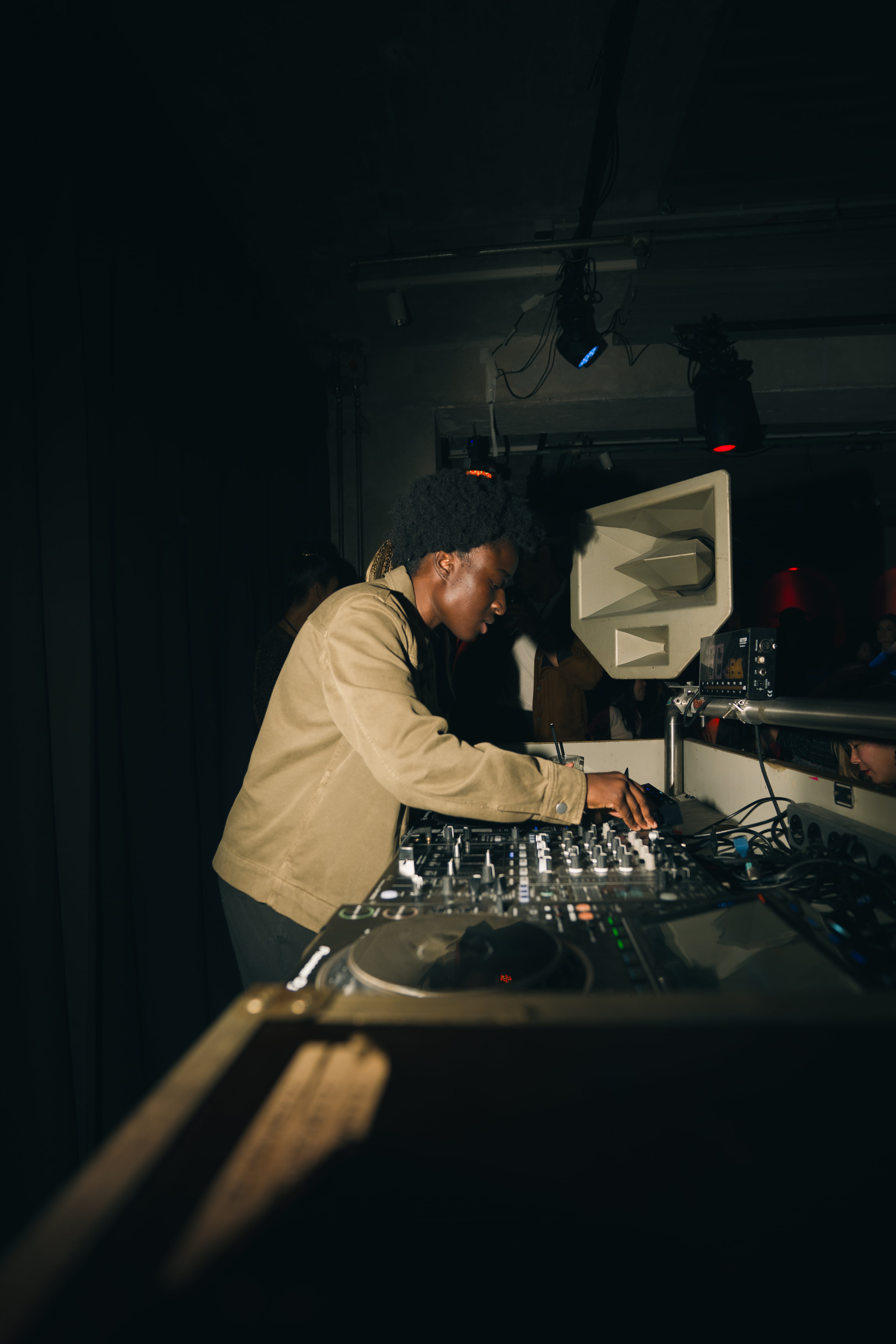

There is a piece of advice Eunice has been carrying for over a year. It came from a DJ with years of experience behind him, after a difficult set she'd rather forget. He didn't walk her through the equipment. He didn't explain what she'd done wrong technically. He just said: "Play as if you're in your living room." She's still thinking about it.
Not because it solved anything immediately. Because it named something she already knew, that the music she plays at home, for no one, is the music she's most honest in. And that getting closer to that version on stage is the whole point.
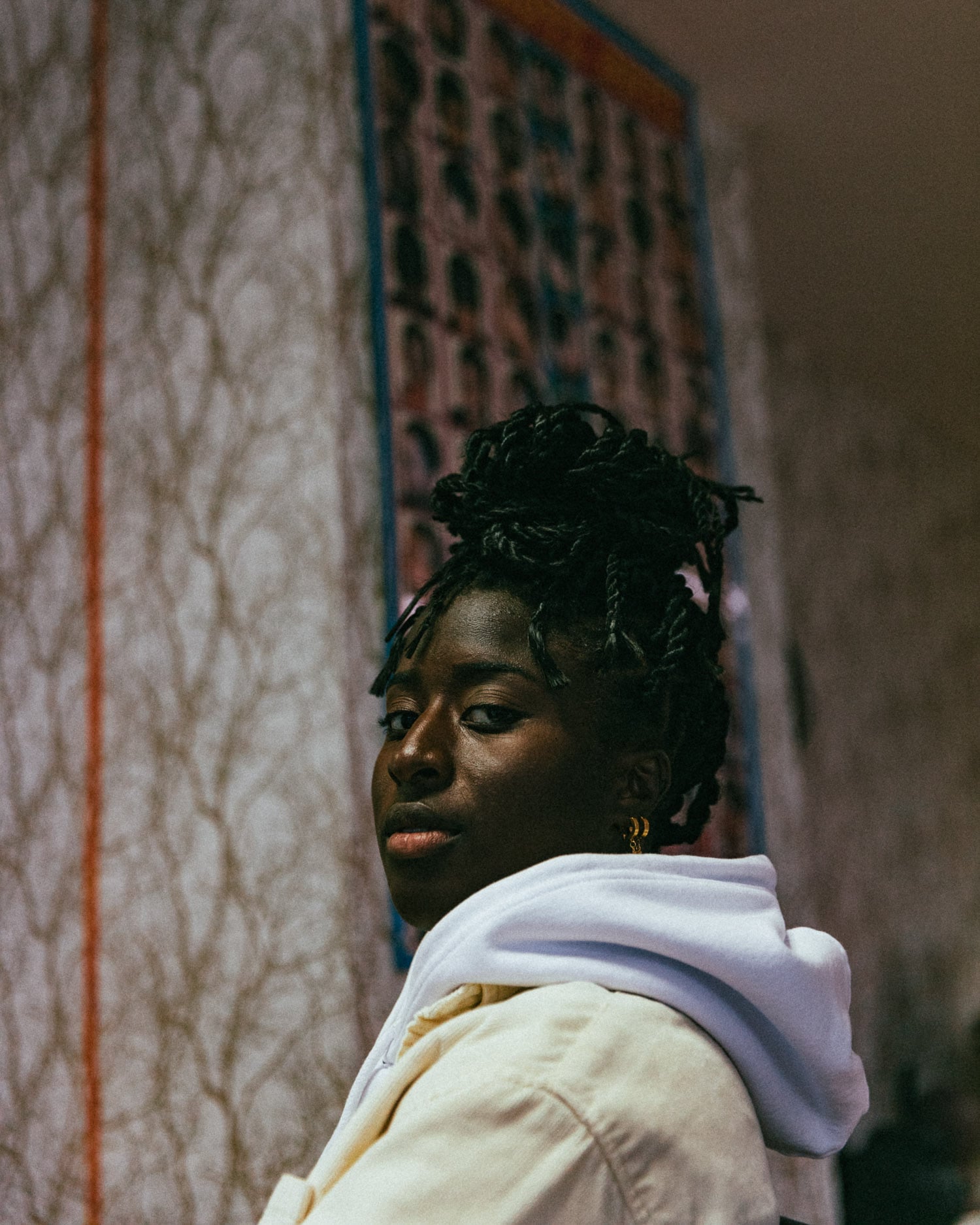

Eunice grew up in Wuppertal, in NRW, born to Ghanaian parents who filled the house with Ghanaian music. Her siblings brought R&B and hip-hop through the door. Somewhere along the way she started exploring other genres too. She went through every phase, and says honestly that all of it stayed inside her, even the things she didn't register as formative at the time.
But for most of her life, music ran alongside something else entirely. She has been a professional footballer since she was 18. She played for top Bundesliga clubs including FC Bayern, Bayer 04 Leverkusen, and FC Köln, and has played internationally in Sweden, Spain, the USA, and Switzerland. She is, at 34, still playing, currently at Viktoria Berlin, a women's club she moved to two years ago, bringing her experience to help guide the team toward the women's Bundesliga.
The move to Berlin happened because of a serious knee injury. ACL. Her contract at Köln wasn't renewed. She had considered ending her career altogether. Then came the offer from Viktoria, a project with a vision, and a chance to use what she knew. She arrived in Berlin in winter 2023 with no idea she was about to start a second career.
Rehab, when you're a professional athlete, is a job in itself. Three, four hours of training each day. Treatments. A programme to work through. And then, time. Free time, in a new city, with a body that wasn't ready for anything else.
She started going to events. And she kept noticing the same thing: where are the women? She looked across dancefloors and lineups and couldn't find them. "I thought, I could do this," she says.
She met Rejy around the same time, who was also just starting. They learnt together, on a small controller at home, in those early months. She has videos from that period. She watches them occasionally, she says, and cringes. The BPMs were wrong. Amapiano sits at 112, 113; she was running it at 120 because she didn't know yet. There were no real transitions. It was, by her own word, catastrophic.
I didn't know what I was doing. I was just playing. Seeing what came out.
— EUNICE
Her first proper booking came in 2024. The knowledge of what she was actually doing, she says, came later than that, last year, really. She is precise about this. There is a version of DJing where you manage the equipment and play songs, and there is a version where you understand what you're doing and why. The second version took longer to arrive. "I know exactly what I'm doing now," she says. "But I had to get there."
Getting there included a night she didn't deliver. The crowd was scattered, the genres needed switching faster than she could keep up, and she lost the room. She knew it while it was happening. She made a mistake, panicked, and couldn't find her way back.
What helped was just a few words from an experienced DJ, afterwards. Someone who'd been through enough to know what to say at the right moment. "It was his experience," she says, "not what he could show me on the decks. Just what he said."
She has been recording every set since. Good nights, bad nights, she listens back and finds what to fix. "If I don't record it, I can't learn from it," she says. The same logic she brings from football: you analyse every match. You don't get to skip the ones that went badly.
Her sound has travelled. She started with Amapiano and Afrobeats and has moved steadily into Afro Electronic, something she describes as faster, more varied, more hers. "With Afrobeats, people come to hear their songs," she says. "With Afro Electronic, they come to hear your sound. That's the difference." Afrobeats started to feel, at a certain point, too limited. Too much of the same direction. She wanted to move.
When she started out, she paid attention to who was around her. She watched two Berlin-based DJs closely, Lukinu and Dekkapa. "Why shout out someone so far above you that it means nothing, to either of you?" She prefers to look sideways. The same way, she says, a Bundesliga striker can admire Ronaldo from a distance and still take far more from the player who grew up on the same street.
“I'd rather say something and lose an opportunity than stay quiet and keep it.”
— EUNICEShe takes the same approach to finding tracks. She looks for producers with two monthly listeners. Artists almost no one in the room will have heard yet, but whose tracks sit perfectly next to the ones they already know. "That's where the difference between a good DJ and a really good DJ lives," she says. "Anyone can play what they love at home. The job is finding what the room doesn't know it needs yet."
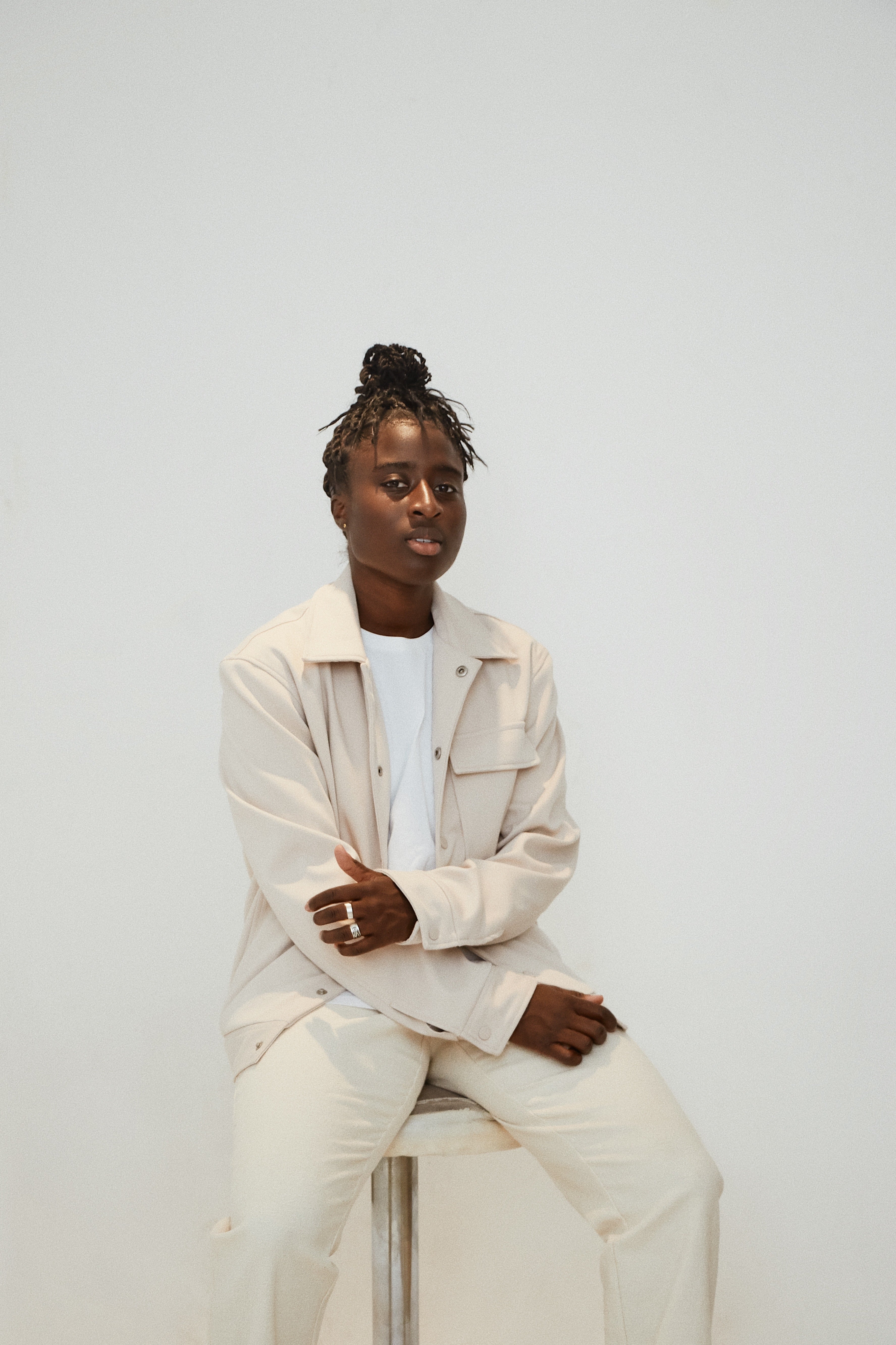

She prefers instrumentals. Would always rather play without vocals. But she reads where she is. At certain events, vocals come in because the room needs the hook. At a night where the crowd already understands the sound, she leaves them out entirely. "I adapt," she says. "But I know what I prefer."
She doesn't drink. Doesn't take drugs. She's aware of how DJing gets associated from the outside, the long nights, the club world, all of it, and she's aware that as a footballer, still active, still carrying injury history, she can't afford to hand anyone a reason to doubt her focus. "If they want to find a problem, they'll find one," she says. "I'd rather not make it easy." She goes into the music sober and fully present.
The Berlin Afro Electronic scene she wishes for doesn't really exist yet, but it's growing, slowly. She thinks about this constantly. She's frustrated, specifically, by the knowledge that doesn't move: who to call for funding, which doors are open and how, which contacts could actually help someone who's starting out. "There are people who know how this works," she says, "and they don't share it. And I think that's a waste."
She doesn't think bringing in international names from outside will build it either. She's thought through that option. But a scene doesn't work like that. It has to grow from inside the community that's already here, making the music that already exists, for the people already trying to find it. "We have to build it ourselves," she says. "There's no shortcut."
And part of building it means talking about what's broken. One mistake from a woman and the side-eye starts. A man makes the same mistake and it passes. She has watched this happen. She will keep naming it, even if it costs her connections, even if it makes certain people uncomfortable. "I'd rather say something and lose an opportunity than stay quiet and keep it," she says.
She's not ready to go fully into DJing yet. Football is still the main job, still the main commitment, still the thing that brought her to Berlin in the first place. The plan is straightforward: until the fees change, she keeps a main job. She's not pretending otherwise.
But the ambition is there, and it's specific. Not to be the biggest name on the poster. To be the best version of herself in the room. To help build something in this city that currently doesn't have a name yet, because it hasn't grown large enough to need one.
"DJing, you can't injure yourself," she says, almost as a footnote. "That's the one advantage it has over football."
She laughs. Then she puts her headphones back on.